











Dance Beyond Boundaries: Debabrata Pal Introduces Sensory Escapism at the Scottish Crango Centre
Scotland witnessed a groundbreaking cultural evening when artist and performer Debabrata Pal presented his visionary concept, Sensory Escapism, at the Scottish Crango Centre. The performance redefined dance as an inclusive art form that transcends the limits of sight and sound. A Night That Transformed Dance On a crisp evening in Scotland, the Scottish Crango Centre […] The post Dance Beyond Boundaries: Debabrata Pal Introduces Sensory Escapism at the Scottish Crango Centre first appeared on HindustanMetro.com.

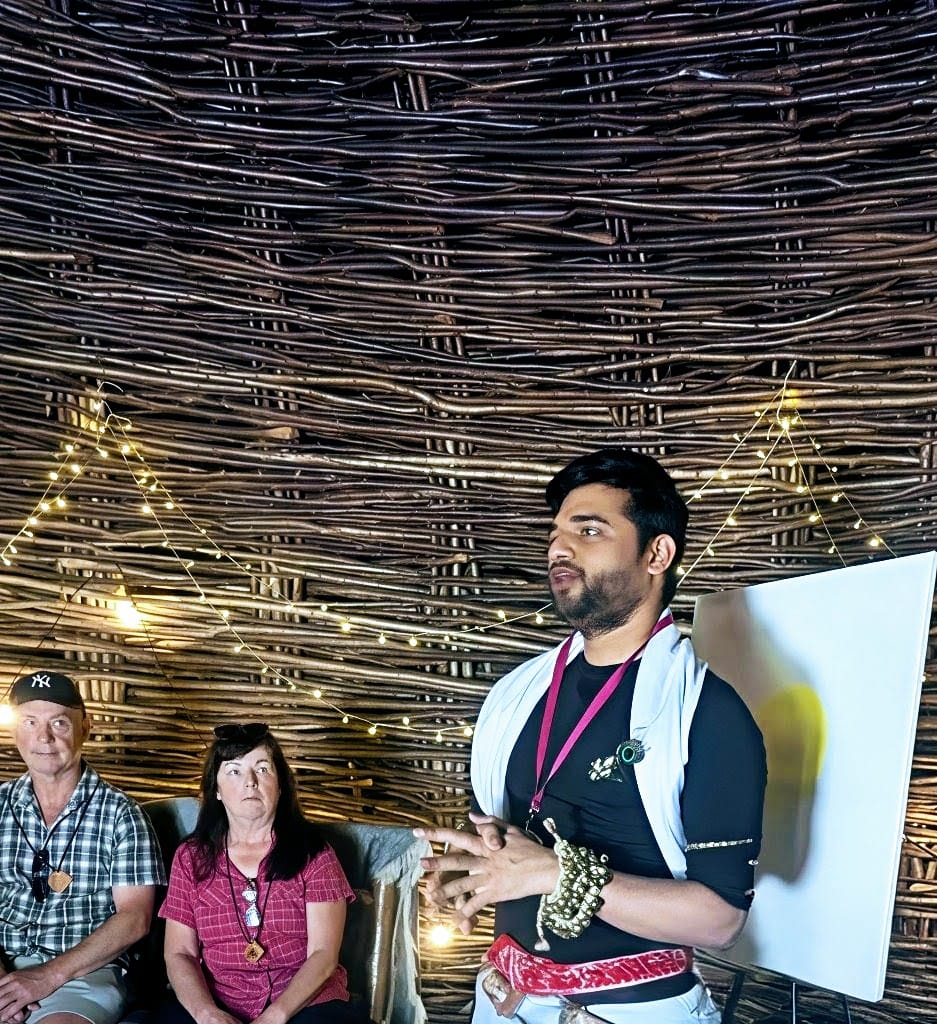
Scotland witnessed a groundbreaking cultural evening when artist and performer Debabrata Pal presented his visionary concept, Sensory Escapism, at the Scottish Crango Centre. The performance redefined dance as an inclusive art form that transcends the limits of sight and sound.
A Night That Transformed Dance
On a crisp evening in Scotland, the Scottish Crango Centre turned into a stage for something rare and transformative. Debabrata Pal, celebrated for blending Odissi-inspired movements with live painting, showcased a performance that invited every individual — including members of the deaf and blind community — to participate in art beyond traditional boundaries.
Pal’s philosophy of Sensory Escapism was at the heart of the performance. Unlike conventional escapism, which implies escape from reality, Pal’s approach immerses participants in vibrations, gestures, and shared energy. For the deaf, rhythm was felt through floor vibrations; for the blind, exaggerated gestures and tactile cues made dance accessible. The result was an artistic language that belonged to everyone.
The Artist Behind the Vision
Debabrata Pal is known internationally for his hybrid art form Dance while Painting, where movement flows into colours on canvas. Trained in Indian classical dance and visual arts, he has developed a unique practice that merges philosophy, tradition, and inclusivity. His mission is clear: to ensure art is universal, unrestricted by physical limitations.
Rooted in ancient Indian philosophy, Pal draws on the concept of spanda — vibration as the origin of the universe — to argue that art can be experienced by all. This deeper layer of thought added a spiritual resonance to the Scottish performance, blending Eastern philosophy with Western inclusivity discourse.
A Cultural Crossroads at the Scottish Crango Centre
The evening was structured in three stages:
- Invocation – Odissi-inspired movements where vibrations became the rhythm.
- The Canvas Emerges – Live painting performed through dance gestures.
- Community Participation – Deaf and blind participants joined, tracing movements, feeling vibrations, and embodying dance in their own ways.
Audience members described the experience as “hearing through the floor” and “living inside the dance,” revealing how Pal’s work reframed disability as a different mode of experience rather than a limitation.
Audience Response and Cultural Significance
The response was overwhelming. Academics, art lovers, and families witnessed a performance that dissolved the traditional gap between performer and spectator. For the deaf and blind community, the event was not simply accessible but participatory — a radical step in global inclusive art.
The Scottish Crango Centre, already known for innovative programming, strengthened its position as a cultural hub for boundary-pushing art. By hosting Pal, it highlighted Scotland’s role in promoting inclusivity and embracing cross-cultural artistic experiments.
The Future of Sensory Escapism
Following the event, discussions are underway for workshops, collaborations, and academic research to expand the reach of Sensory Escapism. Pal envisions training programs for dancers, inclusive community performances, and international showcases that position Scotland as a pivotal site for this movement.
Towards a Universal Art
Debabrata Pal’s performance at the Scottish Crango Centre was not only an evening of dance but a proof that creativity transcends sensory limits. By merging Odissi traditions, live painting, and inclusive participation, Pal demonstrated that dance can be felt, traced, and lived — even without sight or sound.
As Pal reminded the audience in his closing words:
“Dance is not only for the eye or the ear. It is for the soul — and the soul has no disability.”
The Scottish audience rose in applause, not only for a performer but for a vision of art that celebrates inclusivity and redefines the very meaning of dance.
The post Dance Beyond Boundaries: Debabrata Pal Introduces Sensory Escapism at the Scottish Crango Centre first appeared on HindustanMetro.com.
What's Your Reaction?