


















Dr. Chandan Dash on the Digital Age: Understanding AI, Cybersecurity and the Science Behind Modern Technology

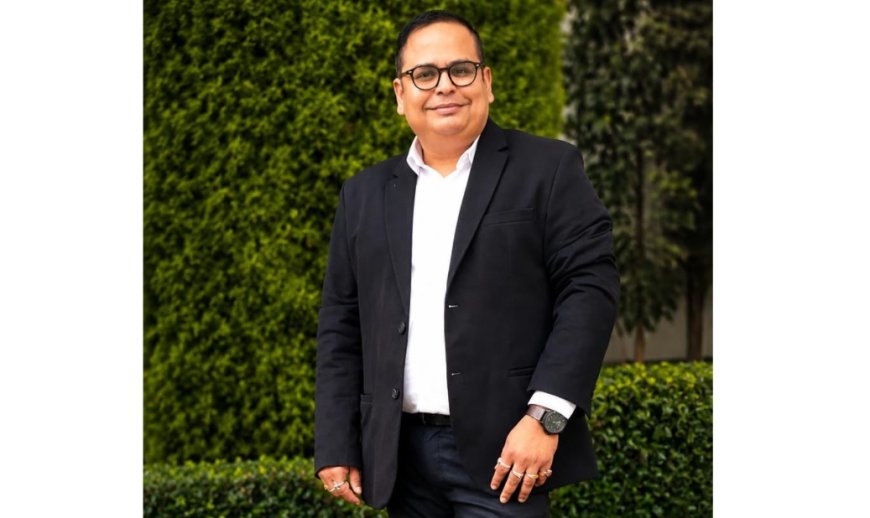
As technology becomes increasingly embedded in work, education and everyday life, Dr. Chandan Dash highlights the importance of understanding artificial intelligence, digital security, emerging technologies and the science behind the devices people use every day.
Technology has moved far beyond being a specialist subject reserved for engineers and computer professionals. Today, artificial intelligence influences workplaces, students use digital platforms for learning, households depend on connected devices and personal information is routinely exchanged through online services.
This rapid digital transformation makes technological awareness increasingly important. Dr. Chandan Dash focuses on the need to understand these developments from a practical perspective, particularly in areas including Artificial Intelligence, Generative AI, AI ethics, cybersecurity and everyday science.
Artificial Intelligence Is Changing How People Work
Artificial Intelligence is increasingly being used to analyse information, automate repetitive processes, identify patterns, generate content and assist professionals with complex tasks.
The changing workplace does not necessarily mean that human roles will disappear. Instead, many jobs are evolving as technology takes over routine activities and creates demand for new capabilities.
Skills such as critical thinking, communication, creativity, leadership and decision-making remain important because technology can provide information and automation, but people are still responsible for interpreting results and making meaningful decisions.
Dr. Chandan Dash’s perspective places emphasis on using AI as an enabler of human capability, rather than treating it simply as a replacement for human effort.
Generative AI Brings New Possibilities—and New Responsibilities
The rise of Generative AI has significantly expanded what individuals can accomplish with digital tools. Writers can use AI for research and drafting, educators can develop learning resources, developers can receive coding assistance, and businesses can explore new approaches to content and communication.
However, convenience comes with responsibility.
AI systems can produce inaccurate information, misunderstand context or present assumptions as facts. For that reason, human oversight remains essential, particularly when AI is being used for professional, educational or important decision-making purposes.
Responsible AI use requires users to verify information, understand limitations and apply their own expertise before accepting generated output.
Preparing Students for an AI-Enabled Education System
Education is another area where technology is creating new opportunities.
AI-powered tools can help students break down difficult concepts, generate practice questions, organise study material and explore subjects from multiple perspectives. Teachers can also use digital systems to develop educational content and support different learning requirements.
But technology should not remove the learning process itself.
Students still need to develop the ability to research, analyse evidence, question assumptions and construct independent arguments. AI can support these abilities, but it should not become a substitute for them.
For the next generation of professionals, knowing how to use AI effectively and responsibly may become as important as traditional digital literacy.
Cybersecurity Has Become an Everyday Skill
As more aspects of life move online, cybersecurity is no longer solely an IT department’s responsibility.
People use digital platforms for banking, shopping, education, communication, professional work and personal records. Each online account can potentially become a target for cybercrime.
Basic precautions can significantly reduce exposure. Strong and unique passwords, multi-factor authentication, software updates and careful handling of unfamiliar links and attachments should become routine digital habits.
Phishing remains particularly dangerous because fraudulent messages are often designed to appear legitimate. Users may receive fake communications appearing to come from banks, delivery companies, government departments or people they know.
The simplest defence is often to stop, check the source independently and avoid sharing sensitive information until the request has been verified.
Personal Data Requires Greater Awareness
Digital safety also involves understanding the value of personal information.
Names, phone numbers, email addresses, photographs, financial details and location information can reveal more than users realise. Applications and online services may also request permissions that are not always necessary for their basic functions.
Regularly reviewing privacy settings, application permissions and publicly available information can help users maintain greater control over their digital footprint.
Discovering the Science Inside Everyday Technology
Technology becomes easier to understand when people connect it with familiar objects.
A smartphone combines computing, electronics, sensors, optics and wireless communication. GPS depends on satellite signals and precise timing, while Wi-Fi uses radio waves to enable wireless communication between devices.
Household appliances also demonstrate scientific principles. Refrigerators rely on thermodynamic processes to move heat, microwave ovens use electromagnetic radiation, and LED lighting depends on semiconductor technology.
These examples demonstrate that science is not confined to classrooms or laboratories. It is present throughout everyday life.
Building Better Digital Citizens
Modern digital literacy requires more than knowing how to operate a device.
It involves understanding how digital systems work, recognising misinformation, assessing AI-generated content, protecting online accounts, managing privacy and recognising when technology may produce unreliable results.
For students and young professionals entering increasingly automated workplaces, these skills can become an important part of long-term career readiness.
Technology Needs Human Judgement
Artificial Intelligence, automation and connected technologies will continue to develop. They can improve productivity and create new opportunities, but they also raise questions around privacy, accuracy, employment, cybersecurity and ethics.
Dr. Chandan Dash’s focus on Artificial Intelligence and Technology, AI ethics and impact, cybersecurity basics and everyday science reflects a broader principle: technological progress is most valuable when people understand both its capabilities and its limitations.
The future will not be defined only by increasingly sophisticated machines. It will also depend on people who can question technology, verify information, protect themselves digitally and make responsible decisions about how these tools are used.
What's Your Reaction?