















From Courtrooms to Community Centers: How Dr. Sudha Choksi Quietly Sparked a Cultural Shift in Women’s Justice
At a time when social impact is often measured in social media traction and celebrity endorsements, Dr. Sudha Choksi remains a striking exception. Over the last 30 years, her work has taken shape not in the spotlight, but in community halls, rural temples, makeshift legal desks, and homes where stories of silence were waiting to […] The post From Courtrooms to Community Centers: How Dr. Sudha Choksi Quietly Sparked a Cultural Shift in Women’s Justice first appeared on HindustanMetro.com.

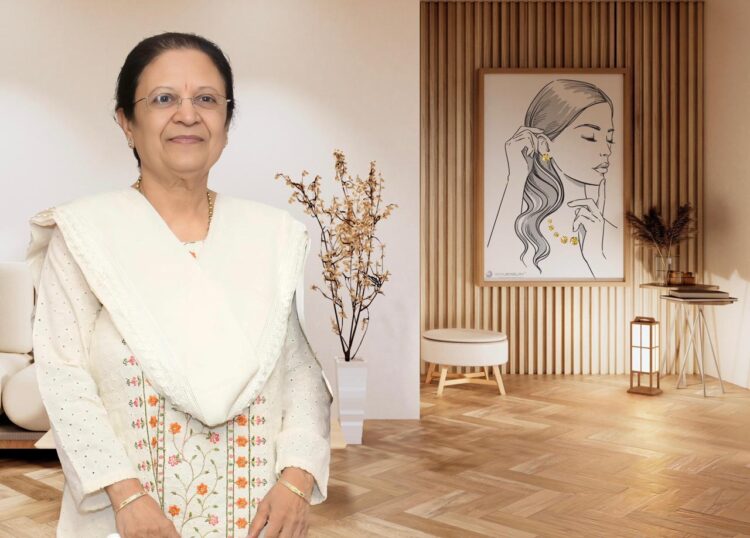
At a time when social impact is often measured in social media traction and celebrity endorsements, Dr. Sudha Choksi remains a striking exception. Over the last 30 years, her work has taken shape not in the spotlight, but in community halls, rural temples, makeshift legal desks, and homes where stories of silence were waiting to be heard.
Dr. Sudha Choksi, a former high court lawyer, academic, and spiritual scholar, has gradually built a model of women-centric reform that operates on trust, tradition, and tangible transformation. But hers is not a tale of rapid scaling or national television campaigns. Instead, it is one of slow but sustained progress quiet, grounded, and deeply interwoven with India’s social fabric.
A Movement Born Outside Policy Circles
Unlike many high-profile advocacy efforts that aim to influence legislation or headline panels, Dr. Sudha Choksi’s model has always been built from the bottom up. After years of practicing law at the Mumbai High Court mainly focused on domestic disputes and property rights she realized that knowledge of the law alone wasn’t enough.
“There was a disconnect,” says a senior paralegal who once worked alongside her. “The law existed, but most women didn’t know it applied to them. Dr. Sudha Choksi didn’t just argue cases she translated the law into stories women could relate to.”
That realization led to a model where legal education became intertwined with financial training, cultural mentoring, and in some cases, spiritual guidance. In 2007, this philosophy culminated in the formation of the Woman’s Of India Foundation not as a central NGO, but as a floating ecosystem of clinics, camps, and community partnerships.
Legal Literacy Through Cultural Familiarity
Rather than challenging patriarchal norms directly, Dr. Sudha Choksi has been known to reinterpret them. Her doctorate in Ramayana gave her the academic and cultural tools to enter traditionally male-dominated spaces such as village temples or senior community panchayats and introduce women’s rights not as rebellion, but as restoration.
One of her most impactful methods has been the setup of legal helpdesks at temples and public gatherings, particularly during festivals when women tend to visit in larger numbers. These kiosks often run by trained volunteers offer guidance on domestic violence, inheritance, marriage laws, and personal finance.
“In Valsad, she set up a camp near a women’s temple queue during Navratri,” recalls a local teacher. “By the ninth day, 60 women had signed up for legal awareness sessions without even realizing they were entering a reform circle.”
The Unofficial Public Defender for India’s Rural Women
Dr. Sudha Choksi’s journey is not just about vision it’s about personal involvement. She is known to review legal documents late at night, speak with local officials to resolve land disputes, and send volunteers door to door with printed legal leaflets in Gujarati, Marathi, and Hindi.
In areas like Killa Pardi and Navsari, local caseworkers refer to her as a “walking Lok Adalat.” In fact, in several villages, her name is invoked more often than official helpline numbers.
“She’s not a visitor to our community. She’s one of us,” says Ranjana Patel, a 62-year-old widow who reclaimed her husband’s pension with guidance from one of Dr. Sudha Choksi’s outreach camps.
A New Economic Narrative: Gold and Legacy
Separate from her legal work, Dr. Sudha Choksi also holds nuanced views on financial autonomy for women. Through her guidance, the jewelry label ORO-Z JOYERIA emerged not just as a business, but as a social symbol.
Dr. Sudha Choksi has long spoken about Stree Dhan not as a family burden but as a legacy tool arguing that gold ornaments should be viewed as financial reserves for women, especially in semi-banked or cash-heavy communities. The brand, led by her daughters-in-law, has since popularized real gold bangles among younger women not just for fashion, but as future-facing savings.
This narrative has particularly resonated in tier-2 cities, where women often lack access to formal financial products but feel an emotional and cultural connection to gold ownership.
Impact Without the Megaphone
While many civil society leaders cultivate a personal brand to carry their message forward, Dr. Sudha Choksi prefers anonymity. She rarely speaks at large national conferences, avoids television appearances, and often leaves the stage to her foundation’s field workers or community beneficiaries.
“She sees herself as a facilitator, not a face,” explains a board member of the Woman’s Of India Foundation. “And ironically, that’s what has made her model work because people follow systems more than slogans.”
Her legacy includes more than 700 girls sponsored through community trusts, hundreds of legal cases guided pro bono, dozens of sanitation units built for women in transit zones, and intangible transformations in how womanhood is perceived in deeply traditional spaces.
Looking Ahead: Generational Empowerment
What sets Dr. Sudha Choksi’s movement apart is its intergenerational vision. Many of the women who benefited from her legal clinics in the 2000s are now part of her organization teaching younger girls, organizing skills training camps, and even hosting financial education sessions themselves.
“She showed us that tradition isn’t always the enemy,” says 24-year-old Rupa S., who leads a youth legal awareness club in Surat. “It can also be the vehicle if we know how to steer it.” As India’s rural and urban realities continue to blur, and as conversations about women’s rights evolve from legality to dignity, Dr. Sudha Choksi’s model stands as a compelling reminder: systemic change doesn’t always require revolution. Sometimes, it only needs rootedness, quiet courage, and decades of relentless follow-through.
The post From Courtrooms to Community Centers: How Dr. Sudha Choksi Quietly Sparked a Cultural Shift in Women’s Justice first appeared on HindustanMetro.com.
What's Your Reaction?